
The Language Delusion
The Image Before the Word

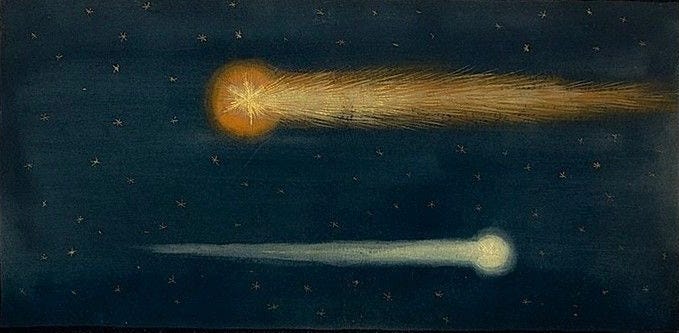
The modern academy has elevated language into a false god. Camille Paglia has been saying this for decades, often alone, often unfashionably, and almost always correctly. As she puts it, “The visual is sorely undervalued in modern scholarship. Art history has attained only a fraction of the conceptual sophistication of literary criticism. Drunk with self-love, criticism has hugely overestimated the centrality of language to western culture. It has failed to see the electrifying sign language of images.” Her claim is blunt: when language is treated as the primary engine of meaning, imagination withers, especially in the arts. This belief did not emerge accidentally. It arrived through postwar French theory and hardened into doctrine in American universities in the late twentieth century: the idea that there is no reality outside language, that meaning is produced entirely by linguistic structures, and that knowledge itself is impossible without words. What began as a philosophical provocation metastasized into an academic creed, absorbed wholesale by art schools, humanities departments, and cultural theory. Paglia rejects this premise outright. For her, it is not merely wrong. It is anti-human.
